Multiple myeloma is a cancer of plasma cells in the bone marrow. It can weaken bones, damage kidneys, and suppress the immune system. It’s the second most common blood cancer in the U.S.
For patients who are younger and fit enough, treatment often starts with chemotherapy followed by an autologous stem cell transplant (ASCT). This is a reset button for the immune system. It can lead to long, treatment-free remissions.
But about half of patients are ineligible for this transplant. Often, it’s due to age or other health conditions. For them, treatment has meant a lifelong cycle of different drugs to control the disease, with no clear path to a deep, lasting remission.
They’ve been waiting for a true first-line alternative.
The Surprising Shift
The old belief was that powerful cell therapies should be saved for later. They were seen as a last resort after many other treatments had failed.
This study challenges that idea head-on.
What if you used one of medicine’s most advanced weapons first? What if, instead of years of therapy, you aimed for a one-time treatment that could wipe the cancer out from the beginning?
That’s exactly what researchers tested.
The treatment is called BCMA CAR-T cell therapy. It’s often called a "living drug."
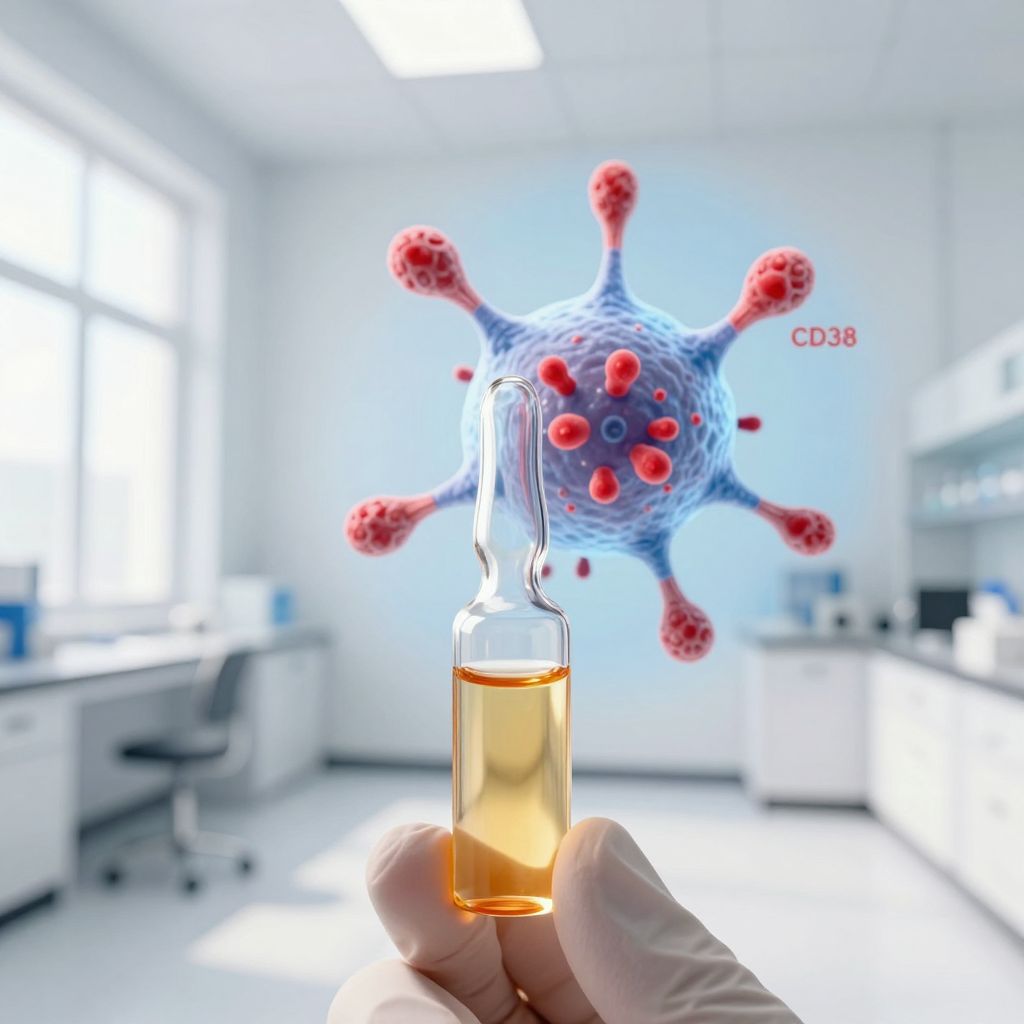
Here’s a simple way to think about it. Your immune system has T-cells that are supposed to find and kill cancer. But myeloma cells are good at hiding. They have a "lock" on their surface called BCMA.
Doctors take a patient’s own T-cells and genetically re-engineer them in a lab. They add a new "key" — a Chimeric Antigen Receptor (CAR) — that perfectly fits the BCMA lock.
These supercharged CAR-T cells are then infused back into the patient. They multiply and become a relentless army, hunting down every myeloma cell with the BCMA lock.
A Snapshot of the CAREMM-001 Trial
Researchers enrolled 36 adults with newly diagnosed myeloma who could not have a stem cell transplant. Their median age was 68. After some initial standard therapy, each patient received a one-time infusion of their own BCMA-targeted CAR-T cells.
The main goal was to see if the treatment could achieve "minimal residual disease (MRD) negativity." This is a super-sensitive test that looks for even one cancer cell hiding in a million healthy ones. It’s the deepest level of remission we can measure.
The Unprecedented Result
The result was striking. Three months after the single infusion, 100% of patients (36 out of 36) had achieved MRD-negative remission.
Not a single person had detectable cancer at that deepest level.
The responses also deepened over time. The complete response rate—where no cancer is seen on standard tests—jumped from 33% before the infusion to 69% at three months, and then to an astounding 94% at the last follow-up.
But here’s what makes this truly compelling.
With a median follow-up of nearly 16 months, not one patient saw their MRD-negative status reverse. No patient’s cancer progressed. There were no deaths from the treatment or the disease during the study.
The cancer was not just controlled. It was profoundly suppressed, and that suppression held.
Managing the Side Effects
This power comes with predictable side effects that doctors are learning to manage. Nearly all patients had temporary drops in blood counts, which recovered.
The well-known risks of CAR-T therapy, cytokine release syndrome (a flu-like inflammatory response) and neurotoxicity, did occur but were almost all mild. No severe cases were reported in this trial.
This doesn’t mean this treatment is available yet.
What This Means for Patients Today
This is a phase 2 clinical trial. The therapy is not approved for newly diagnosed myeloma. It remains an option only in later lines of treatment or within clinical trials.
If you or a loved one is newly diagnosed and transplant-ineligible, this research is a beacon of hope. It shows a potential future pathway. The most important step right now is to discuss all treatment options, including the possibility of clinical trials, with your oncology team.
Understanding the Limits
The study is relatively small and single-armed, meaning everyone got the treatment with no comparison group. The follow-up, while encouraging, is still short for a disease like myeloma. Longer observation is needed to see if these remissions truly last for years.
These powerful results are paving the way for the final step: a large, randomized phase 3 trial. That trial will directly compare this frontline CAR-T strategy to the current standard of care for transplant-ineligible patients.
If it confirms these findings, it could fundamentally change the first chapter of treatment for thousands of people. The goal is shifting from a lifetime of management to a one-time intervention for a deep, lasting remission. The journey from promising trial to standard practice takes time, but this study marks a decisive and hopeful turn in the road.