Mode
Text Size
Log in / Sign up

Radiomics-ML model predicts invasiveness in subcentimeter subsolid lung adenocarcinoma

Radiomics-ML model predicts invasiveness in subcentimeter subsolid lung adenocarcinoma
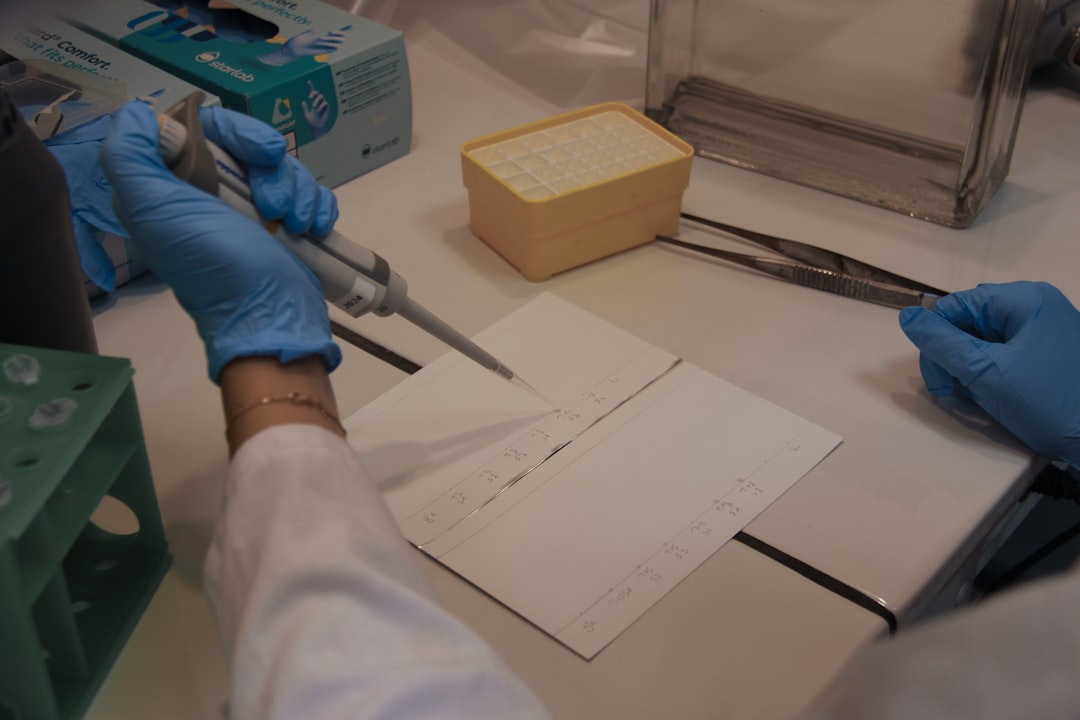
Photo by Dmytro Vynohradov / Unsplash
Key Takeaway
Consider radiomics-ML model for predicting invasiveness in subcentimeter nodules, but note retrospective validation only.

This two-center retrospective cohort study developed and validated an interpretable radiomics-machine learning model to predict invasiveness in surgically confirmed subcentimeter (≤1 cm) subsolid lung adenocarcinoma. The study included 177 patients from Hospital 1 for training/internal validation and 83 patients from Hospital 2 for external validation. The prevalence of invasive adenocarcinoma in the cohort was 44.6%.

The primary intervention was a radiomics-machine learning model using preoperative CT features, with logistic regression, random forest, and support vector machine algorithms tested. The best-performing model was logistic regression with 10 selected radiomic features. In internal validation, this model achieved an area under the curve (AUC) of 0.842, with sensitivity of 79.2% and specificity of 73.3%. In external validation, the AUC was 0.778 (95% CI: 0.673-0.862). Decision curve analysis suggested potential clinical utility compared to empirical management strategies.

Safety and tolerability data were not reported. The key limitation is the retrospective study design, which introduces potential biases and limits causal inference. The authors note this represents a predictive association only, not a causal one. While the model shows promise for potential integration into clinical workflow to aid surgical decision-making, the evidence requires prospective validation before any clinical implementation.

Study Details

Study typeCohort
EvidenceLevel 3
PublishedMar 2026
View Original Abstract ↓
BackgroundPreoperative discrimination of invasive adenocarcinoma (IAC) from pre-invasive lesions in subcentimeter subsolid nodules (SSNs) remains challenging using conventional computed tomography (CT). We aimed to develop and validate an interpretable radiomics-machine learning (ML) model for predicting invasiveness by leveraging SHapley Additive exPlanations (SHAP).MethodsIn this two-center retrospective study, 177 patients from Hospital 1 (training and internal validation) and 83 patients from Hospital 2 (independent external validation) with surgically confirmed lung adenocarcinoma manifesting as SSNs (≤1 cm) were enrolled. Radiomic features were then extracted from preoperative CT using the uAI Research Portal. Following a reproducibility assessment (intraclass correlation coefficient >0.75), the minimum Redundancy Maximum Relevance (mRMR) and Least Absolute Shrinkage and Selection Operator (LASSO) regression were applied to select the most predictive features. Three ML classifiers: logistic regression (LR), random forest (RF) and support vector machine (SVM) were trained and validated using a 7:3 cohort split, and the best-performing model was further evaluated in the external validation cohort. Model performance was evaluated by the area under the receiver operating characteristic curve (AUC), sensitivity, specificity, F1 score, calibration, and decision curve analysis (DCA). SHAP analysis was employed to provide global and local model interpretability.ResultsA set of ten radiomic features was selected to predict invasiveness (IAC prevalence: 44.6%). The LR model demonstrated optimal performance during internal validation (AUC: 0.842; sensitivity: 79.2%; specificity: 73.3%; F1 score: 0.745) and exhibited superior generalizability compared to both the RF and SVM models. In the external validation cohort, the LR model maintained robust diagnostic performance, with an AUC of 0.778 (95%CI: 0.673-0.862), confirming its cross-institutional generalizability. The DCA and PRC curves further confirmed its clinical utility and stability across different institutions. SHAP analysis identified wavelet_HLL_glszm_LowGrayLevelZoneEmphasis (an indicator of necrosis), original_shape_Flatness (reflecting morphological irregularity), and log_firstorder_LoG.Minimum (suggestive of air-trapping) as top predictors of invasiveness. Decision curve analysis confirmed the model’s superior clinical utility over empirical management strategies.ConclusionThe developed radiomics-LR model robustly predicts invasiveness in subcentimeter SSNs and provides biologically plausible explanations through SHAP. Its balanced performance and inherent interpretability support its potential integration into clinical workflow to aid in surgical decision-making.
Free Newsletter

Clinical research that matters. Delivered to your inbox.

Join thousands of clinicians and researchers. No spam, unsubscribe anytime.