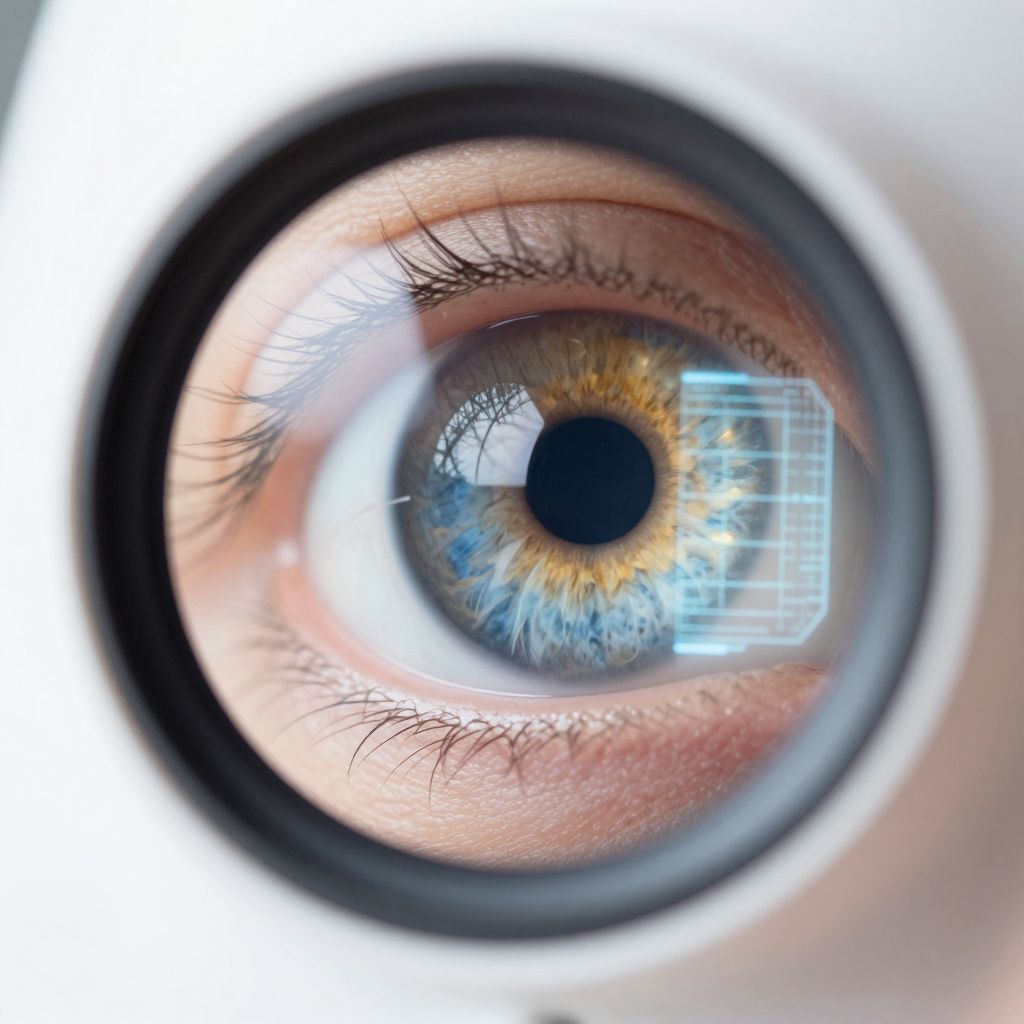
Maria noticed her vision blurring last winter. By the time she saw a doctor, her diabetes had already harmed her eyes. She’s not alone. Millions of people with diabetes don’t know their eyes are at risk until it’s too late.
Diabetic retinopathy is a leading cause of blindness in adults. It happens when high blood sugar damages tiny blood vessels in the retina. Early stages often have no symptoms. By the time vision changes, damage may already be serious.
Right now, doctors rely on eye exams and blood tests to guess who’s at risk. But these tools aren’t perfect. Some people with poor blood sugar control never develop eye damage. Others get it even with good control. We need better ways to spot danger early.
Now, a new kind of eye scan may change that.
A Hidden Map of Blood Flow
Inside your retina, a delicate web of tiny blood vessels feeds light-sensing cells. Think of it like a city’s power grid — if one line fails, the lights dim. In diabetes, these “wires” slowly break down.
Optical coherence tomography angiography (OCT-A) is like a GPS for blood flow. It takes a detailed picture of the retina’s blood vessels — no dyes, no needles, just light. It measures how dense and active the vessels are.
Two key numbers stand out: vessel density (VD) and perfusion density (PD). They show how much of the retina is still well-supplied with blood. Lower numbers mean trouble brewing.
The Scan That Sees Trouble Coming
In a new study, researchers scanned 108 eyes of adults with diabetes. Some had no signs of retinopathy. Others had mild or worse damage. The scans focused on the macula — the part of the retina you use to read and drive.
The results were clear. Eyes with even mild diabetic retinopathy had lower vessel and blood flow density — especially in the center of the retina.
After adjusting for age, blood sugar levels (HbA1c), and how long someone had diabetes, two measures still stood out: central vessel density and central perfusion density.
People with lower values were more likely to have retinopathy — even if their blood work looked okay.
The scan alone predicted damage better than standard risk factors like blood sugar and diabetes duration.
Better Than Blood Tests Alone
Here’s what’s different this time.
The OCT-A scan model correctly identified early retinopathy 73% of the time (AUC 0.73). Standard clinical factors did only 60%. When combined, accuracy jumped to 76%.
That means the scan adds real value. It sees what blood tests miss.
Imagine a smoke detector that senses heat before flames appear. That’s what this scan could be for the diabetic eye.
This doesn't mean this treatment is available yet.
Not All Scans Are Equal
But the scan isn’t perfect. It only worked well when image quality was high. Movement, cataracts, or poor focus can blur the picture.
Also, this was a one-time snapshot — not a long-term study. We don’t yet know how fast changes in vessel density predict future vision loss.
Experts say this is a strong step forward. OCT-A is already used in eye clinics for other diseases like macular degeneration. Adding it to diabetes checkups could make monitoring more precise.
Still, it’s not ready for every doctor’s office. Machines are expensive. Training is needed. And insurance may not cover it — yet.
If you have diabetes, you likely already get yearly eye exams. This scan could become part of that visit — not instead of, but in addition to current checks.
It won’t replace blood sugar control. That’s still the most important thing you can do. But this scan could help your doctor catch problems earlier and act faster.
Talk to your eye doctor if you’re curious. Some larger clinics already have the technology.
Here’s the catch. This was a small study at a single center. Most participants were already in eye clinics — not average people with diabetes. That means results might look different in the general population.
Also, the scan can’t yet tell us how to stop the damage. It only shows that it’s starting.
Larger, longer studies are underway. Researchers want to see if tracking vessel density over time can predict who will develop severe retinopathy — and whether early treatment can reverse early changes.
If proven, this scan could become a routine part of diabetes care — like A1C tests or kidney checks.
For now, it’s a promising tool on the horizon. One day, a quick look into a machine could help save your sight — before you ever notice a problem.