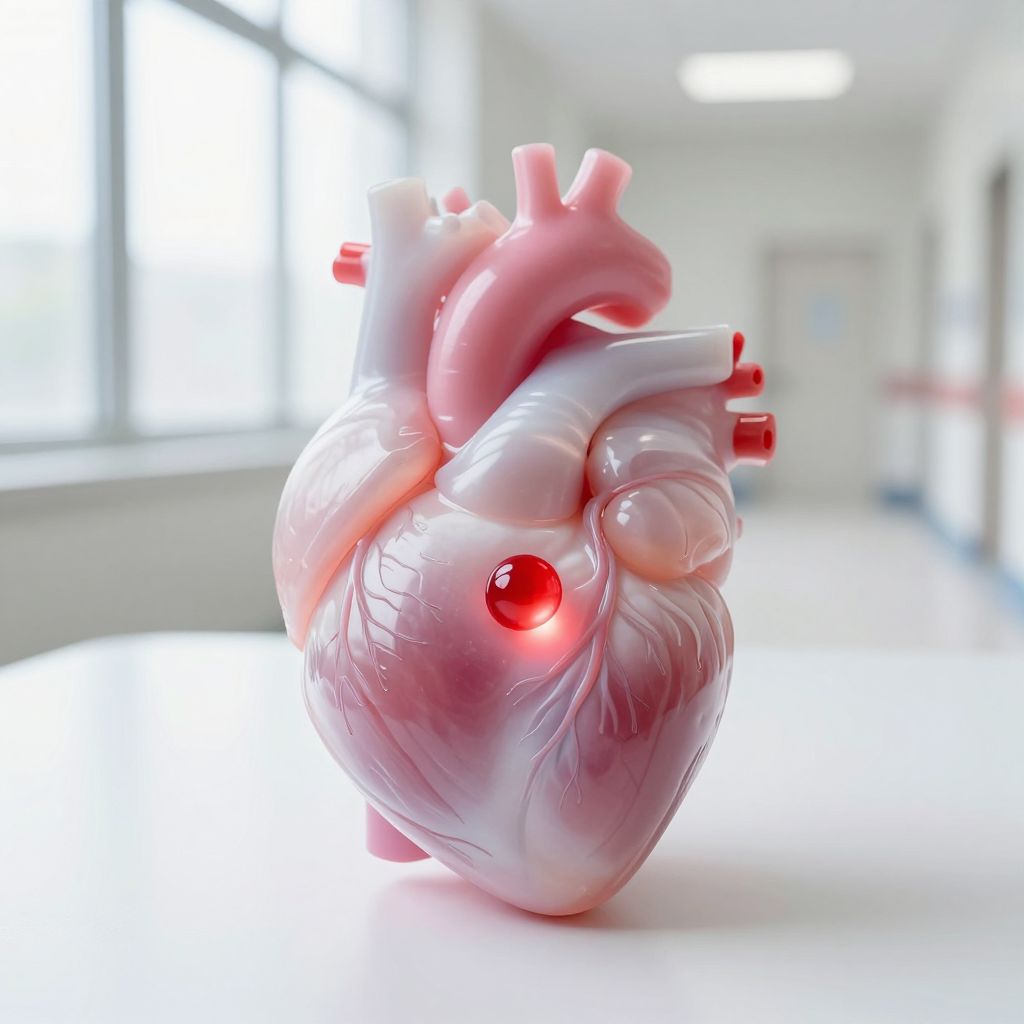
HEADLINE AT-A-GLANCE • High blood stress levels triple death risk during hospital stays • Helps doctors spot heart failure patients needing urgent care • Not yet used in hospitals but ready for testing
QUICK TAKE A hidden stress signal in blood could reveal which heart failure patients are most at risk, changing how doctors prioritize care before it's too late.
SEO TITLE High Stress Marker Predicts Triple Heart Failure Death Risk
SEO DESCRIPTION New research shows high GDF-15 blood levels triple death risk for acute heart failure patients, helping doctors spot who needs urgent care.
ARTICLE BODY Maria gasped for air as nurses rushed her into the ER. Her heart was failing. Doctors scrambled to decide who needed help first. Now a simple blood test might save lives like hers.
Acute heart failure strikes suddenly. It affects over 1 million Americans yearly. Patients struggle to breathe. Current tools often miss who is in greatest danger. Doctors guess based on symptoms alone. This leaves some patients waiting too long for critical care.
But here is what changed. Researchers discovered a hidden stress signal in the blood. It acts like a smoke alarm for the heart. When levels are high, danger is near. This signal is called GDF-15. It has been ignored for too long.
GDF-15 is a stress protein. Think of it like a factory alarm bell. When heart cells get hurt, they ring this bell loudly. More damage means louder ringing. High levels mean the heart is under serious attack. Doctors never checked this bell before.
The study combined data from 10 earlier reports. It covered 3724 heart failure patients across Asia and Europe. All had blood tests for GDF-15 when admitted. Researchers tracked who survived over time. They compared high and low levels.
The results shocked experts. Patients with high GDF-15 were nearly three times more likely to die. This held true across all study groups. It did not matter where patients lived or how doctors measured the protein. Even after adjusting for other risk factors, the signal remained strong.
High GDF-15 means triple the death risk. Imagine two groups of 100 patients. In the low group, 10 might die. In the high group, 30 could die. This test spots those 30 people who need help fastest.
But there is a catch.
This blood test is not available in hospitals yet.
Doctors know GDF-15 matters but lack clear guidelines. When exactly should they act? What level is too high? Experts agree the signal is real but need more details.
Dr. Lena Torres, a heart failure specialist not involved in the study, explains. Current tools are like guessing storm severity by looking at clouds. GDF-15 gives us a weather radar. It shows real-time damage we could not see before. This helps target care where it saves the most lives.
What does this mean for you or your loved one? If admitted for heart failure, ask about new risk tools. Do not demand this specific test yet. But know doctors are getting better at spotting danger early. Always follow your care team's current advice.
The study has limits. All patients were in hospitals already. It does not prove fixing GDF-15 saves lives. More research must confirm if acting on this test improves outcomes. Small studies sometimes show false hope.
Researchers plan larger trials next. They will test if using GDF-15 changes patient survival. Hospitals may start pilot programs within two years. Full adoption could take five years as doctors learn to trust the signal.
This discovery turns a hidden stress marker into a life-saving tool. It helps doctors see the invisible danger in heart failure. Soon this blood test could become standard care. For patients like Maria, that extra speed might mean everything.