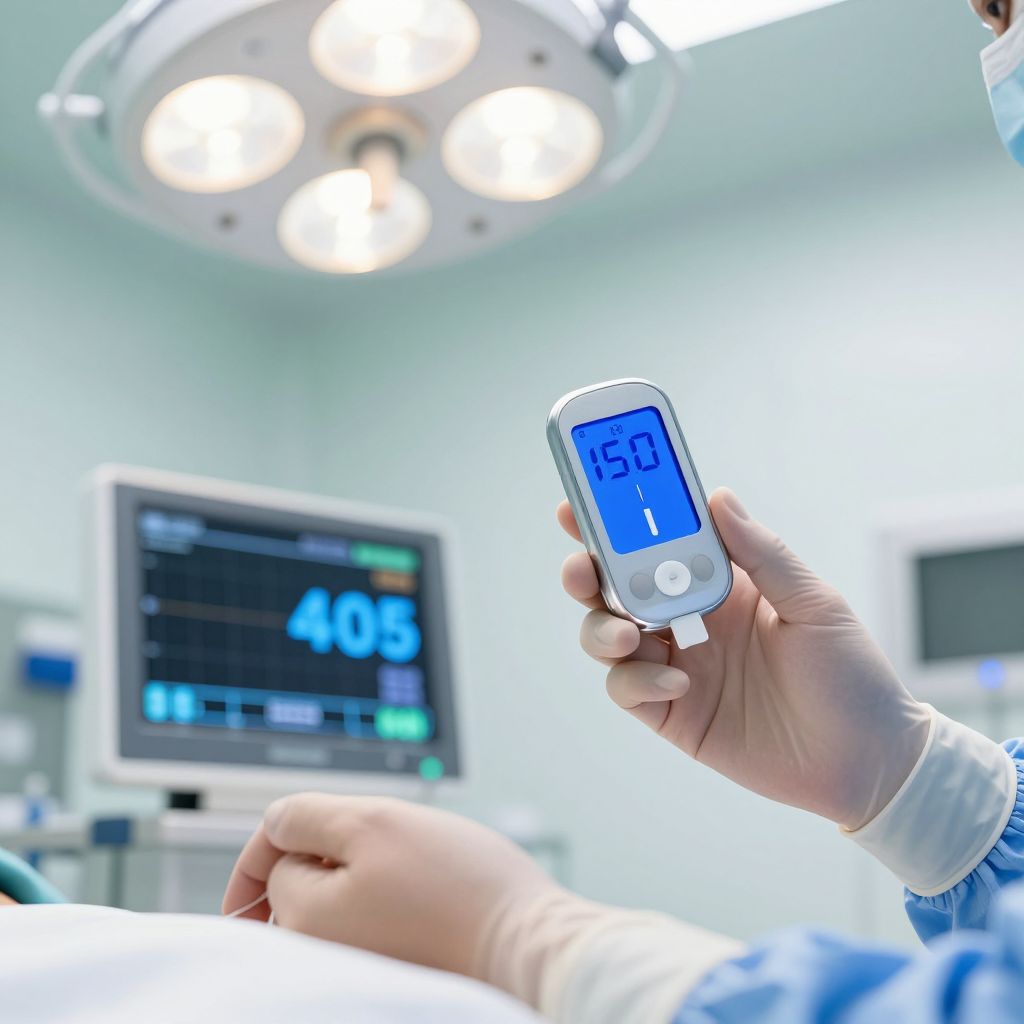
Imagine waking up from surgery only to learn your blood sugar crashed dangerously low. This happens more often than you might think. Standard hospital checks catch the problem too late.
Doctors usually test blood sugar every hour or two. This gap lets levels swing wildly between tests. Patients can suffer harm before anyone notices.
The Hidden Danger In The Operating Room
About half of all patients experience blood sugar problems during surgery. These swings happen because the body reacts to stress and anesthesia. High sugar is common, but low sugar is often ignored.
Current tools only give a snapshot in time. They miss the rapid changes happening between checks. This leaves a dangerous window where patients are vulnerable.
A Better Way To Watch Blood Sugar
Think of standard checks like checking a car's speedometer once every mile. You might miss a sudden spike or drop in speed. Continuous monitoring is like having a live GPS tracking your speed every second.
New sensors work like a tiny camera under the skin. They send data to a screen in real time. This lets doctors see trends instead of just single numbers.
The study looked at how well these new sensors work inside hospitals. Researchers gathered data from ten different studies. They included over five hundred adult patients.
The new sensors were very accurate. They matched lab tests with only a small error margin. This means doctors can trust the numbers they see on the screen.
The biggest win was catching low blood sugar. Standard checks missed these drops in forty-three percent of patients. The new sensors found every single one of these dangerous events.
Doctors also saw better overall control. Patients spent more time in the safe range for blood sugar. This reduces the risk of infection and other complications after surgery.
This doesn't mean this treatment is available yet.
Real World Feasibility
The devices worked well in most cases. Sensors stayed on the skin for over ninety-six percent of the time. There were no serious problems linked to the devices themselves.
Accuracy varied slightly by surgery type. Non-heart surgeries showed the best results. Heart surgeries with low body temperature had slightly higher error rates.
What This Means For Patients
This research suggests a major shift in how hospitals manage surgery. Doctors could move from reacting to problems to preventing them. You might see these sensors become standard care soon.
Talk to your anesthesiologist about your blood sugar risks. Ask if continuous monitoring is an option for your procedure. Being informed helps you prepare for your surgery.
Limitations To Keep In Mind
This is still early stage research. Most data comes from specific hospital settings. Not every hospital has these devices yet. Approval processes take time before they become standard.
More trials are needed to confirm these results. Hospitals must prove the devices work in their specific settings. Once approved, these tools could become routine for many surgeries.
The goal is safer outcomes for everyone. Better blood sugar control leads to faster recovery. Patients can return home sooner with fewer complications.
Research continues to improve these tools. Scientists are working on making them even more accurate. The future of surgery looks brighter with these new monitoring options.