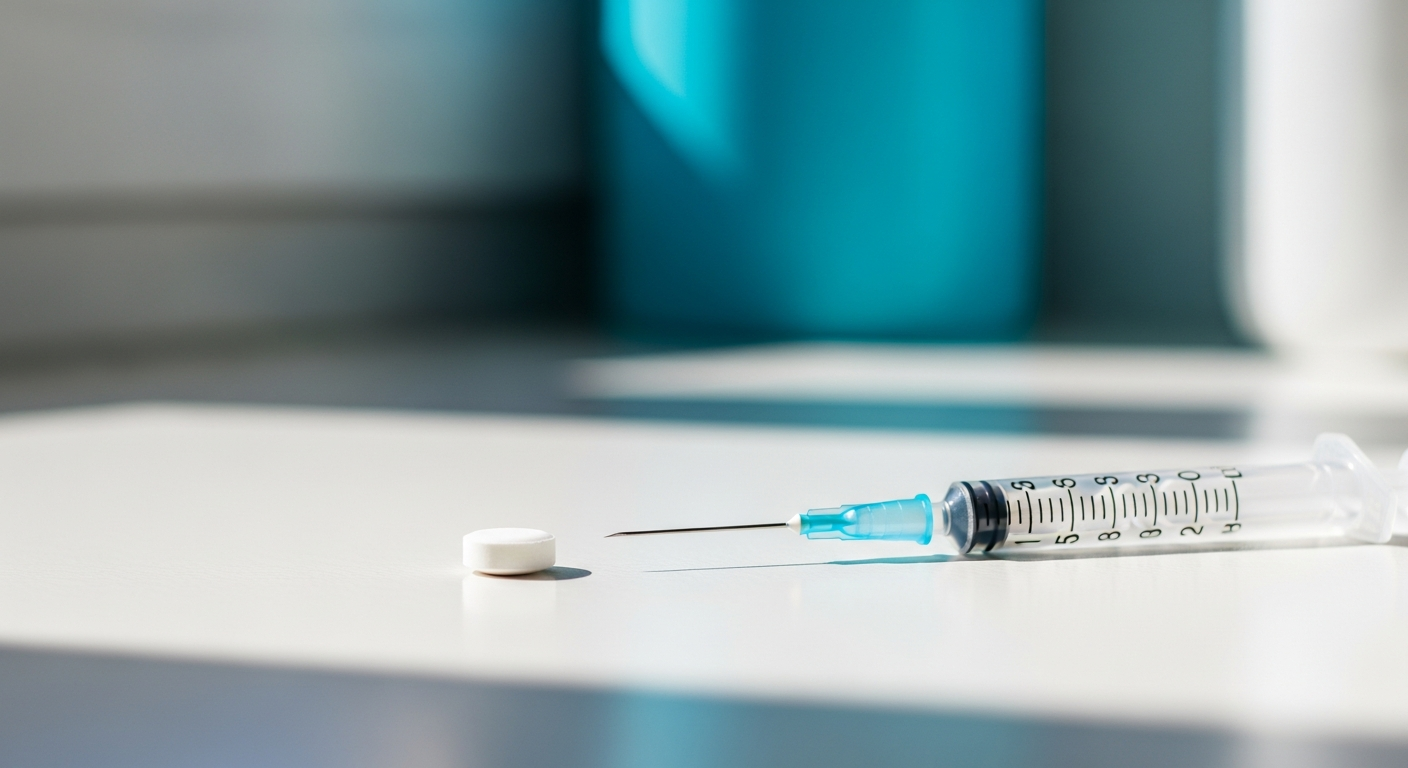
Imagine waking up and taking a simple pill instead of a painful injection. Now imagine that pill also helps you sleep better and feel less depressed.
That is the promise of a new study on dimethyl fumarate (DMF).
Multiple sclerosis (MS) is a disease that attacks the nerves in the brain and spinal cord. It can cause weakness, numbness, and vision problems.
Many people with relapsing-remitting MS (RRMS) have to take monthly shots. These injections can be painful and hard to remember.
Patients often feel frustrated by this routine. They worry about missing a dose or dealing with side effects.
Doctors want treatments that fit better into daily life. They want options that improve how patients feel, not just how their disease looks on a scan.
The Surprising Shift
For years, doctors focused mostly on stopping disease activity. They used scales to measure if the disease was slowing down.
But these scales miss how a patient actually feels. They do not measure sleep, mood, or job performance.
This study changes the focus. It looks at what matters most to the patient: satisfaction and quality of life.
But here is the twist. The study found that an oral pill could improve these areas just as well as, or better than, the old shots.
Think of your body like a busy highway. In MS, traffic jams block the flow of signals.
DMF acts like a traffic cop. It helps clear the blockages and keeps the signals moving.
The pill is special because it is taken by mouth. This makes it much easier to take than a shot.
The study used a slow-start method. Doctors began with a low dose and slowly increased it. This helps avoid stomach upset.
Researchers in Iran watched 645 patients over one year.
Half of these patients had never taken MS medicine before. The other half had switched from shots to this pill.
They took the pill every day for 12 months. Doctors checked in with them every month to track progress and safety.
The results were very positive for patients who had taken MS medicine before.
Their satisfaction with the treatment went up by 16 points. They felt the pill worked better and had fewer side effects.
They also felt more convenient taking a pill than a shot.
Sleep quality improved significantly. Patients reported feeling less tired and more rested.
Work productivity also went up. People missed fewer days at work because of MS symptoms.
Even mood improved. Scores for depression dropped slightly, showing the pill helped mental health too.
This doesn't mean this treatment is available yet.
That is not the full story. About 27% of patients stopped taking the pill during the year.
Most of these patients stopped because of stomach issues like nausea or diarrhea.
However, these side effects often went away after the body adjusted to the medicine.
If you have MS and hate injections, this is good news.
It shows that an oral option exists for many people. It can improve your daily life in many ways.
You should talk to your doctor about your options. Ask if a pill might work for you.
Do not stop your current medicine without asking your doctor first.
This study was done in one country. It only looked at one specific type of MS medicine.
Also, about a quarter of patients stopped taking the pill. This is a real-world issue doctors must solve.
Stomach problems are the main reason people quit. Doctors are working on ways to reduce these issues.
More studies are needed to confirm these results in other countries.
Doctors will likely compare this pill directly with other common MS shots.
If the pill proves safe and effective, it could become a standard choice for many patients.
Research takes time. We need to see long-term data before making big changes.
But the message is clear. Oral medicine is a powerful tool for managing MS.