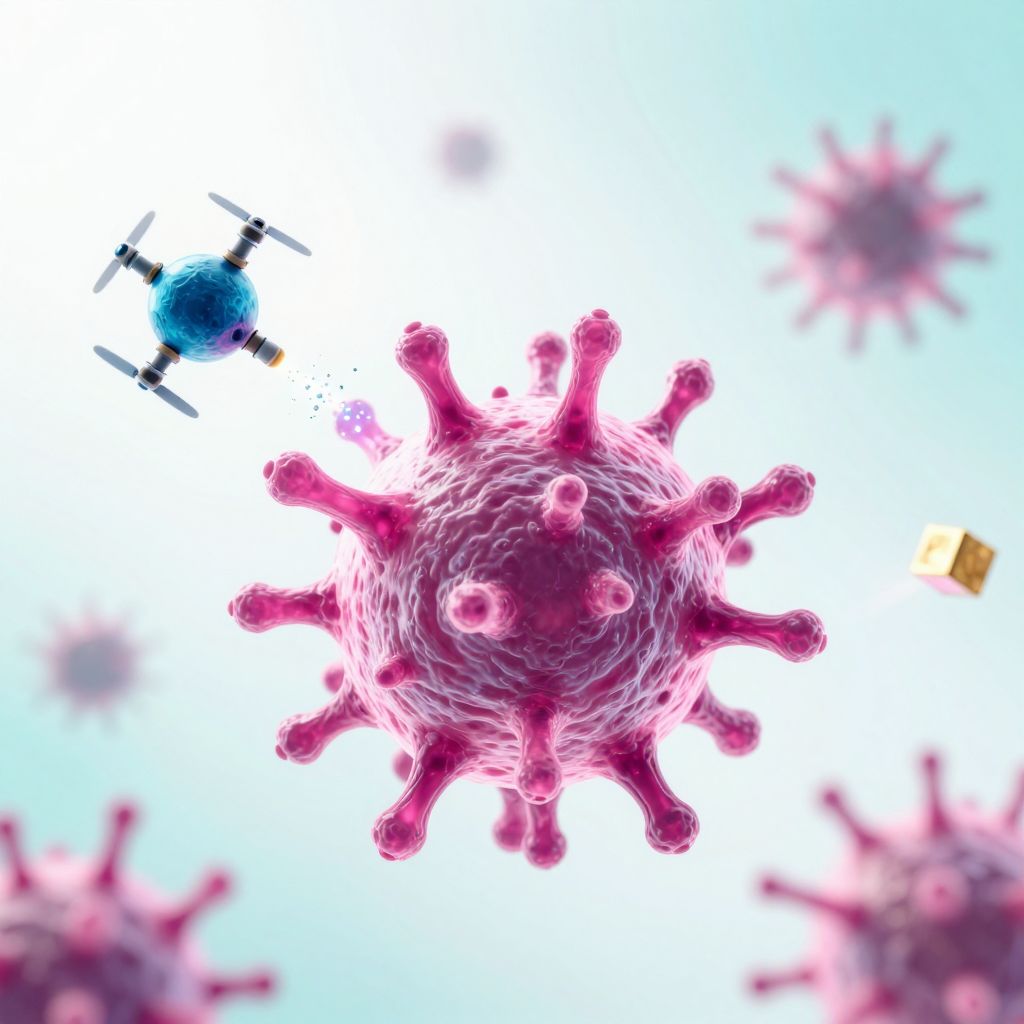
The immune system is now the main weapon
Instead of just poisoning fast-growing cells like chemo does, new therapies train the body’s own immune system to hunt down cancer. Think of it like upgrading from a blunt hammer to a smart missile.
One approach uses engineered immune cells—called CAR T-cell therapy—that are taken from the patient, reprogrammed in a lab to recognize cancer, then infused back into the body. It’s like giving your immune system a wanted poster for the tumor.
Another method uses bispecific antibodies. These are lab-made proteins that grab both cancer cells and immune cells, forcing them to collide. Imagine a bridge that links a killer T-cell directly to a lymphoma cell.
These treatments don’t work for everyone. But when they do, the results can be powerful.
Response rates have doubled since 2000
A major new analysis looked at 132 early-stage trials involving nearly 7,800 patients. The goal was to track how well new drugs worked over time—and what risks they carried.
From 2000 to 2008, only about 1 in 6 patients responded to experimental treatments. By 2018 to 2025, that jumped to more than 1 in 3. Complete remissions—where no cancer is detectable—also rose sharply.
The strongest results came from cellular therapies. Half of those patients achieved complete remission. That’s unheard of in a group once considered untreatable.
Bispecific antibodies came next, with nearly half showing any response and 3 in 10 going into full remission.
Even antibody-drug conjugates—drugs that deliver poison directly to cancer cells—showed meaningful results.
But there’s a catch
Not all patients can access these treatments yet. Most are still in clinical trials or require complex logistics. CAR T-cell therapy, for example, needs specialized centers and weeks of preparation.
Also, side effects are common. More than 60% of patients had serious adverse events, such as high fevers, low blood counts, or neurological symptoms. Still, treatment-related deaths stayed low—under 1%—which is reassuring given the severity of the disease.
New drugs are changing the game
Experts say these findings mark a turning point. For years, early-phase trials in this cancer showed modest results at best. Now, even small studies are reporting dramatic responses.
This doesn’t mean this treatment is available yet.
But it does mean researchers and regulators have clearer benchmarks. They can now compare new drugs against real-world response rates, not just hope for a lucky break.
For patients, it suggests that enrolling in a clinical trial may offer more than just a last resort. In some cases, it could be the best shot at remission.
Not all patients were included
The analysis focused on early-phase trials, so most data come from patients who had already tried and failed standard therapies. It didn’t include long-term survival, which is still being studied.
Also, most trials were short and didn’t follow patients for years. Some newer therapies may keep working after treatment ends, so longer follow-up is needed.
More trials are on the way
Several new CAR T-cell and bispecific antibody therapies are in late-stage testing. If results hold, more could win approval in the next few years.
Researchers are also looking at combining these treatments or using them earlier in the disease course. The goal is to help more patients respond—and stay in remission longer.
Progress takes time. But for people like Mark, the path forward is no longer a dead end. It’s a road with real hope.