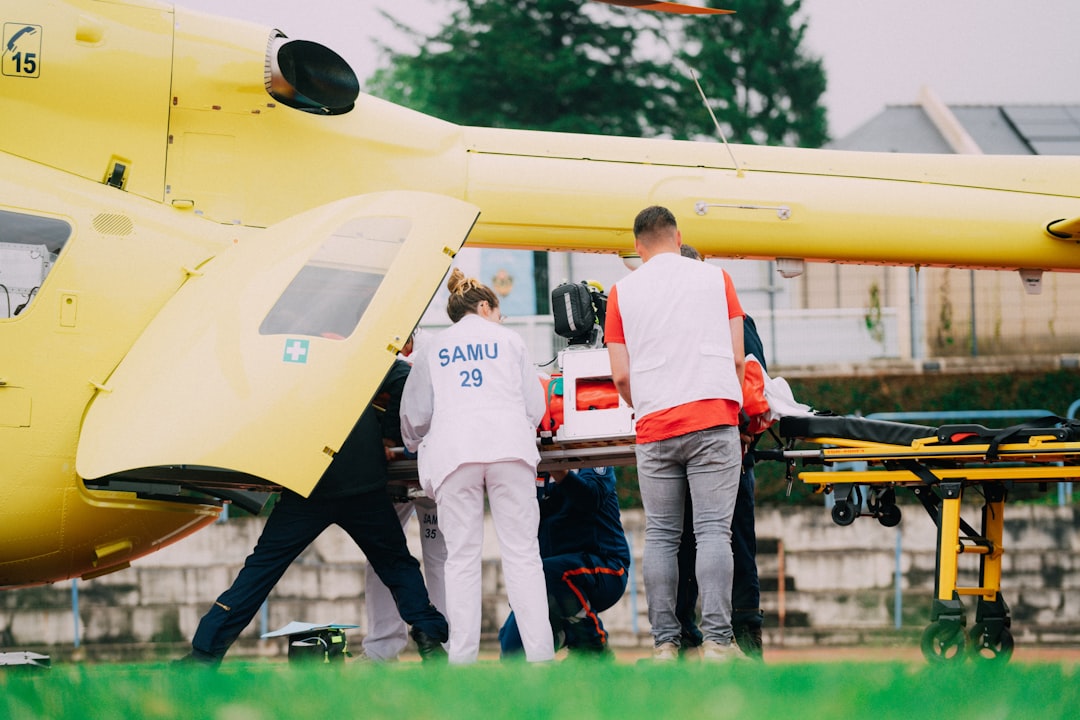
When someone's heart stops beating outside a hospital, every second counts. Paramedics rushing to the scene face a critical choice: how to secure the person's airway to help them breathe. For decades, the gold standard has been a procedure called endotracheal intubation—carefully threading a breathing tube down the windpipe. It's a complex skill. The alternative is using a simpler device called a supraglottic airway, which sits above the vocal cords and is generally quicker to place. This research matters because it asks a fundamental question for emergency medical services worldwide: does spending precious time on the more difficult procedure actually help more people survive? The answer affects how paramedics are trained and what equipment fills their ambulances.
The researchers didn't conduct a new experiment. Instead, they performed what's called a meta-analysis. They gathered and combined the results from eight previous clinical studies, creating a much larger pool of data to examine. In total, they looked at outcomes for 14,797 patients who suffered out-of-hospital cardiac arrests. In these real-world emergencies, paramedics had used either the traditional endotracheal intubation or a supraglottic airway device. The researchers then compared two key outcomes: whether patients had a return of spontaneous circulation (ROSC), which means their heart started beating again on its own, and whether they survived long enough to be discharged from the hospital.
Here's what they found when they crunched all the numbers together. Overall, there was no significant difference in outcomes between the two airway management techniques. The chance of a patient's heart restarting (ROSC) was not higher with one device over the other. Similarly, the rate of patients surviving to leave the hospital was statistically the same. The researchers reported a risk difference of 0.02 for ROSC and 0.01 for survival, which translates to a difference of 2 and 1 more people out of every 100, respectively—a difference so small it could easily be due to chance. However, the analysis took an interesting turn when they looked at a specific factor: paramedic training. In a subgroup of studies where paramedics received additional, specific training on using the supraglottic airway devices, there was a small but statistically significant positive effect on ROSC. In the subgroup without that extra training, no effect was seen. It's crucial to understand that the test to see if these subgroup results were truly different from each other was not itself statistically significant, meaning we can't be sure the training itself caused the difference.
The study did not report on specific safety concerns or adverse events related to either procedure. This is a common limitation in meta-analyses, as the original studies may not have collected or reported that data uniformly. The main caution from this research lies in its design and the nuances of the findings. This is a meta-analysis, which means it reports observed associations from past studies; it does not prove that using one device causes better outcomes than another. The promising finding about additional training comes with important caveats: the training programs differed between the studies, and the statistical test comparing the 'training' and 'no training' subgroups was not significant. This means we should not overstate the role of training based on this single analysis.
What does this mean for patients and communities right now? This large review provides reassuring evidence that, on a population level, the choice between these two advanced airway techniques does not appear to be a major factor in determining whether someone survives a cardiac arrest outside the hospital. For emergency medical systems, it suggests that equipping crews with supraglottic airways—which are often easier and faster to use—is a reasonable strategy that is not linked to worse survival rates. The hint about the value of specific training is an important point for further research but is not a definitive guide for practice today. The most critical factors for survival remain early recognition of cardiac arrest, immediate bystander CPR, and rapid defibrillation. This study helps clarify that once professional help arrives, the specific advanced airway method used may be less important than other elements of care.