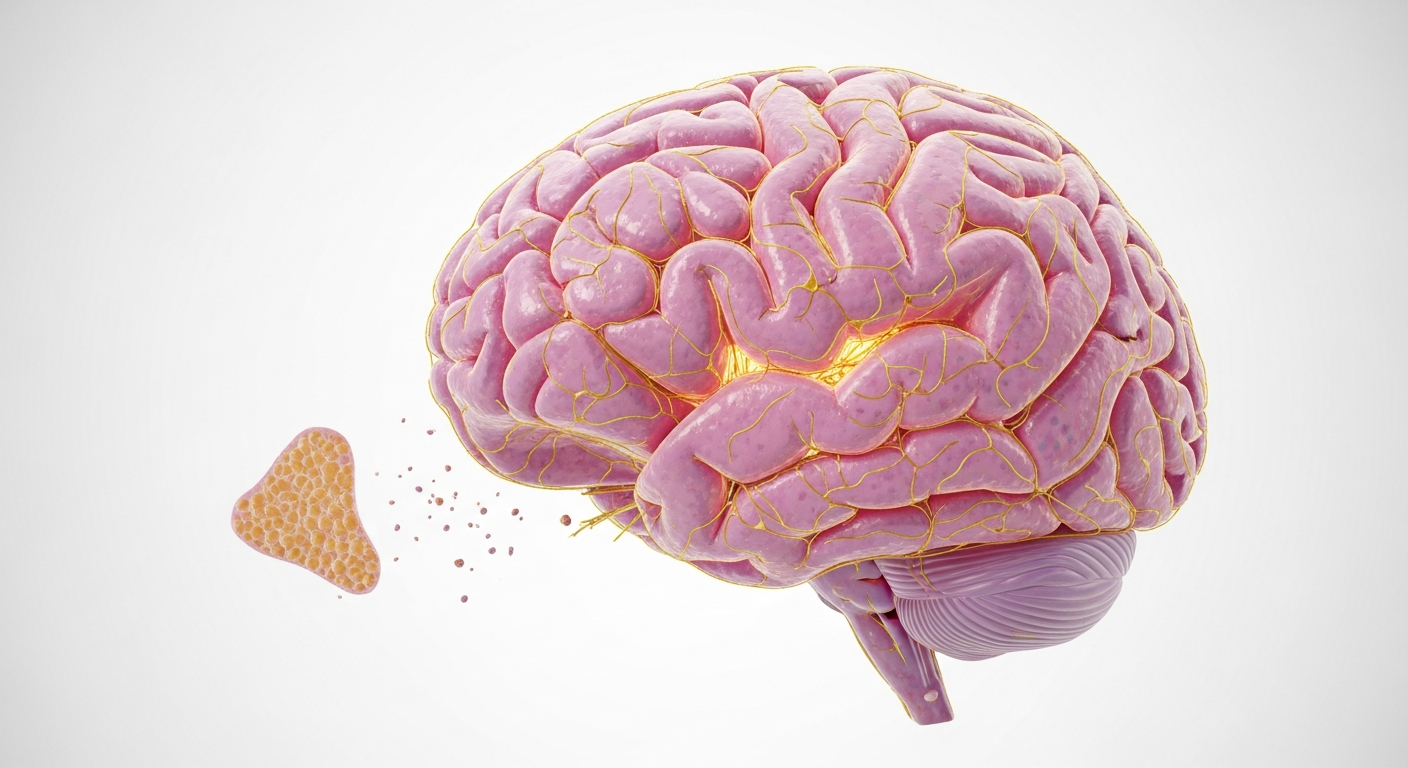
The Silent Threat
Imagine walking through a crowded room. You know the layout, you know the faces, and you can navigate the crowd easily. Now imagine that some of the furniture in that room is slowly being replaced by heavy, invisible blocks. You might not notice the blocks yet, but eventually, they make it harder to move around.
This is what happens in the early stages of Alzheimer's disease.
Scientists have found specific proteins in the blood and brain that signal this problem is starting. These are called biomarkers. When these markers are high, it means the disease process has begun.
But here is the good news. Just because the blocks are there does not mean you will immediately fall down. Some people have a built-in advantage that lets them keep moving around the room longer.
Millions of people are living with these early changes without knowing it. They feel fine, yet their brain is already showing signs of wear and tear.
Current treatments often focus on stopping the disease after symptoms appear. But by then, a lot of damage has already happened. Doctors are now looking for ways to protect the brain before symptoms get bad.
This new research shows that two things act as a buffer. They are not medicines. They are lifestyle factors that we can influence.
The Surprising Shift
For a long time, scientists thought only having a high school diploma or college degree mattered. They believed education was the only shield against memory loss.
But this study changes that view. It shows that how your brain looks on a scan matters just as much as your school records.
What Scientists Didn't Expect
The researchers looked at many different factors. They checked education levels, income, and job status. They also looked at the physical size of the brain.
They found something unexpected. The size of the brain did not matter. The number of years in school did not matter.
What mattered was the "brain age."
Think of your brain like a car. Two cars can have the same engine. One is a brand-new model, and the other is an old model with high mileage. If you put a heavy load on both, the new car handles it better. The old car struggles.
In the study, "brain age" was calculated using MRI scans. It compares your actual brain size to what a brain of your age should look like. If your brain looks younger than your actual age, you have a "younger brain."
The study tested 621 adults. Most were over 69 years old. They were physically inactive but lived in their own homes.
The team measured two main things. First, they checked for Alzheimer's proteins in the blood. Second, they checked how well people could remember stories, do math, and focus on tasks.
They found a clear pattern. People whose brains looked younger handled the Alzheimer's proteins much better. Their memory and thinking skills stayed strong even when the disease markers were high.
The Catch
This doesn't mean this treatment is available yet.
It is important to understand that this is not a new drug. You cannot buy a pill to make your brain look younger.
The study shows that your current brain health acts as a shield. But it does not tell us exactly how to build that shield. Scientists are still figuring out the best ways to keep the brain looking young.
The results suggest that protecting your brain's structure is key. This might involve staying active, managing stress, or other healthy habits.
If you are worried about your memory, talk to your doctor. They can check your brain health and discuss ways to stay resilient.
Do not panic if you have early signs. Your brain has more strength than you think.
This study is a starting point. It proves that brain reserve matters. Now, scientists need to find out how to build that reserve.
Future trials will test specific exercises and diets to see if they can make your brain look younger. Until then, the message is simple: take care of your brain today.