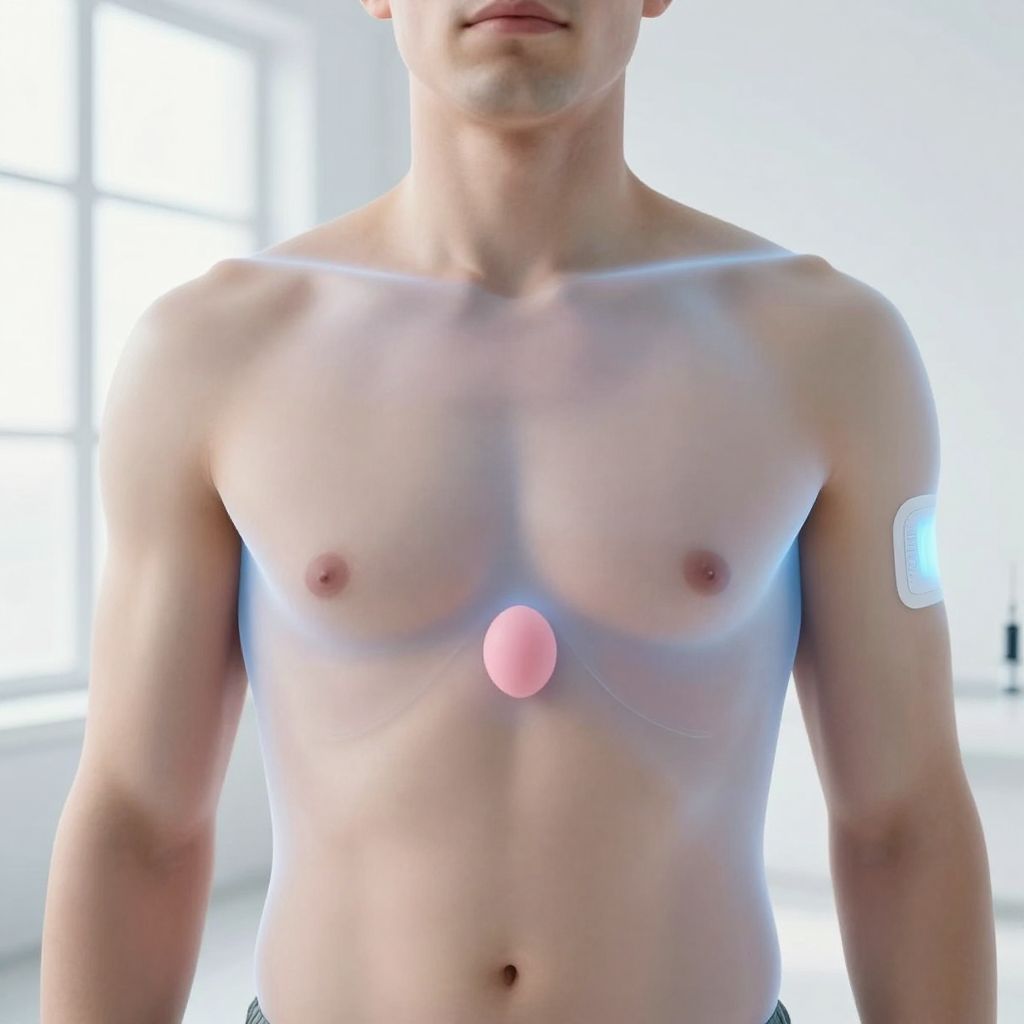
For men diagnosed with locally advanced prostate cancer, managing symptoms while controlling the disease is a major priority. Standard treatments often involve shots that lower testosterone, but these can cause uncomfortable side effects like severe hot flashes. A new study offers a potential alternative: a skin patch that delivers estradiol. This research is important because it compares this new patch against the usual hormone shots, looking at whether patients can get the same cancer protection with fewer daily disruptions to their lives. The findings could change how doctors discuss treatment options with patients who are worried about quality of life issues like sweating and skin changes.
In this large study, researchers worked with 1,360 men across 75 centers in the United Kingdom. The participants had locally advanced prostate cancer, meaning the disease had not spread to distant parts of the body but was present in nearby lymph nodes. Half of the men received the new tE2 patch, which delivered 100 micrograms of estradiol every 24 hours. The other half received the standard luteinizing hormone-releasing hormone agonists, which are typically given as injections. The team followed these men for an average of 36 months to see how the treatments affected their health over time.
The main goal was to see if the patch could keep cancer from spreading for at least three years without being worse than the shots. The results showed that 87.1% of men using the patch remained free of metastasis after three years. In the group receiving the standard shots, 85.9% remained metastasis-free. The difference between these two groups was very small, and the study confirmed that the patch was noninferior to the shots. This means the patch provided at least the same level of cancer control as the standard treatment. Over five years, overall survival was 81.1% for the patch group and 79.2% for the shot group, showing similar long-term survival rates.
One of the biggest advantages of the patch was how it affected daily comfort. Hot flashes are a common and distressing side effect of hormone therapy. In this trial, only 8% of men using the patch experienced severe hot flashes. In contrast, 37% of men receiving the standard shots had these symptoms. This is a significant reduction that could greatly improve a patient's daily life. However, the patch did come with a different side effect. Gynecomastia, or breast tissue growth, occurred in 37% of men using the patch, compared to only 9% in the shot group. This trade-off is important for patients to consider when choosing a treatment.
Safety was carefully monitored throughout the study. The researchers reported no serious adverse events and no discontinuations due to safety concerns. While the patch caused more breast tissue growth, the overall tolerability was not reported as problematic. The study was funded by Cancer Research U.K. and the Medical Research Council, which supports independent evaluation of new treatments. It is important to remember that this was a single trial, and while the results are promising, medical decisions should always involve a doctor who knows the patient's full history.
For patients right now, this study suggests that a patch might be a viable option for those who struggle with hot flashes from standard shots. It does not mean the patch is better for everyone, as the higher rate of breast tissue growth is a specific concern. Patients should talk to their oncologist about their specific symptoms and preferences. This research adds another tool to the conversation, allowing for more personalized choices in managing advanced prostate cancer while maintaining quality of life.