Why Antidepressant Treatment So Often Falls Apart
Major depressive disorder (MDD) is one of the most common mental health conditions in the world, affecting hundreds of millions of people. Moderate to severe depression can be disabling, interfering with work, relationships, and daily life.
There are many antidepressant medications available, but no single one works for everyone. Currently, choosing which one to try is often based on general guidelines and a doctor's experience. When that first choice doesn't work — because of side effects or lack of effect — people stop taking it. That gap in treatment can leave people suffering longer than necessary.
Trial and Error Has Been the Standard
For decades, treating depression with medication has involved a lot of guesswork. Doctors try one medication, wait weeks to see if it helps, then switch if it doesn't. It is a slow and often demoralizing process for patients.
But here's the twist: a clinical trial tested whether feeding an individual's detailed clinical profile into an evidence-based software tool could make the first prescription a much better match — reducing the need to abandon treatment before it has a real chance to work.
How the Tool Personalizes the Choice
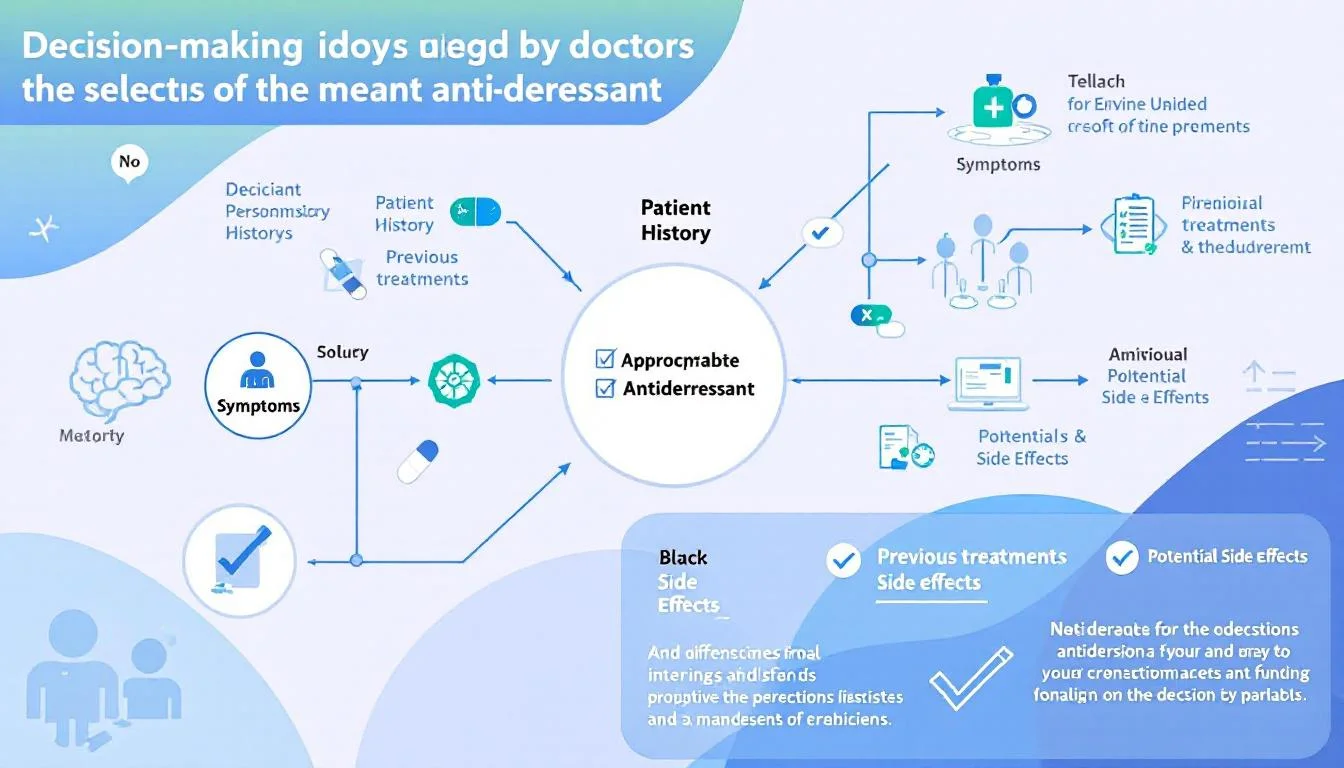
Think of the PETRUSHKA tool like a matchmaking service between a patient and their medication. A matchmaker uses many data points about a person — preferences, history, circumstances — to suggest the best fit, rather than simply picking whoever is available.
The tool takes a patient's specific clinical information and cross-references it against the evidence base for different antidepressants. It then recommends the medication most likely to work well for that individual, reducing the mismatch that leads to early dropout.
Who Was in the Trial
This was a large, well-designed randomized clinical trial — the gold standard for medical evidence. It included 540 adults aged 18 to 74 with major depressive disorder, recruited across 47 clinical sites in Brazil, Canada, and the UK. Half were assigned to receive an antidepressant chosen using the PETRUSHKA tool; the other half received usual care. Participants were followed for up to 24 weeks.
The results were clear. At 8 weeks, only 17% of patients in the PETRUSHKA group had stopped their antidepressant, compared to 27% in the usual care group. That is roughly a 40% reduction in early dropout. Fewer patients in the tool group also stopped due to side effects — 9% versus 16%.
By 24 weeks, depression scores were meaningfully lower in the PETRUSHKA group. Anxiety symptoms also improved more. In plain terms: patients matched by the tool felt noticeably better and were more likely to still be taking their medication months later.
These results are promising, but the trial had some important limitations that mean we should interpret them with care.
What the Experts Make of This
This trial adds important weight to a growing movement toward precision psychiatry — the idea that mental health treatment should be tailored to the individual rather than based on population averages. Published in JAMA, one of the most respected medical journals in the world, this study signals that personalized prescribing tools may deserve a place in routine clinical care.
The PETRUSHKA tool is not yet available as a standard part of depression care. This was a research trial. But the results may influence how doctors and healthcare systems approach antidepressant prescribing in the coming years. If you are currently struggling with depression treatment, talk to your doctor about whether your current medication is the best fit for you. Personalized options and second opinions are always reasonable to explore.
The Honest Limits of This Trial
The trial was not double-blind — meaning patients and doctors knew which group they were in, which can influence outcomes. There was also a significant amount of missing data, particularly at the 24-week follow-up. These limitations mean the results are promising but not definitive.
What Comes Next
The researchers and broader scientific community will need to replicate these findings in other settings and populations. If results hold up, tools like PETRUSHKA could eventually be integrated into standard clinical guidelines for depression treatment. That path through validation and adoption typically takes several years, but the evidence base is now meaningfully stronger.