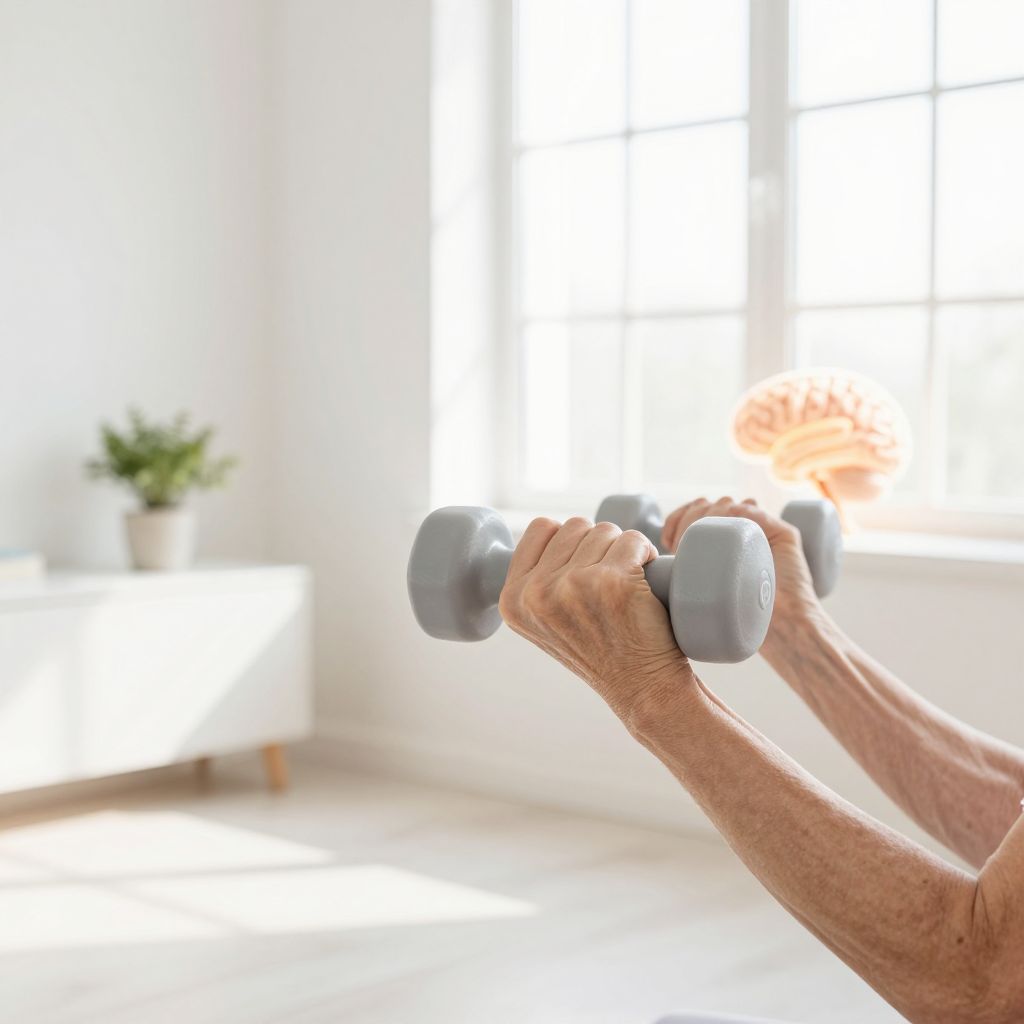
Many families watch their loved ones with Alzheimer's disease struggle to sleep at night. This lack of rest makes the days harder for everyone involved. A new review of studies looks at whether simple exercise can help these patients get the rest they need.
Sleep problems are very common in people with Alzheimer's. As the disease gets worse, sleep often gets worse too. Current medicines can help, but they often have side effects. Families and doctors are always looking for safer ways to improve sleep.
Exercise has long been known to help healthy people sleep better. But does it really work for people with memory loss? Researchers wanted to find out if exercise is a reliable option for Alzheimer's patients.
Here is the twist. Past studies showed mixed results. Some said exercise helps a lot. Others said it did not change much. This new review combines many studies to get a clearer answer.
Think of the brain like a busy factory. Sleep is the night shift that cleans up and repairs the building. When the night shift fails, the factory gets messy. Exercise might act like a manager who helps the night shift work better.
But the brain in Alzheimer's disease is complex. It has trouble sending the right signals. Exercise might help by improving blood flow. It acts like a key that unlocks better circulation to the brain.
The researchers did not run a new experiment. Instead, they gathered data from 12 existing randomized controlled trials. These are the gold standard in medical research. They looked at data from 893 patients in total.
The team used strict rules to pick the studies. They checked the quality of each one. They also looked for bias to ensure the results were fair. This process makes the findings more trustworthy.
The results showed a clear benefit for how patients felt about their sleep. On a standard sleep quality survey, exercise made a big difference. The improvement was significant and meaningful for daily life.
However, the story is different for objective sleep measures. These are measurements taken by machines during the night. The review found no clear change in total sleep time or sleep efficiency.
This difference is important. It means patients feel they sleep better, even if the machines do not show a big change. Feeling rested is a real benefit that matters to families.
This does not mean exercise is a cure for sleep disorders.
Researchers also looked at which types of exercise work best. They found that aerobic exercise showed the strongest effect. Sessions lasting at least one hour also seemed to help more.
Patients with the worst sleep at the start of the studies saw the biggest gains. This suggests that exercise is most helpful for those who need it most. It is a targeted benefit.
Experts say this review is a good step forward. It confirms that exercise has a role to play. But they caution that more work is needed to set the right dose and schedule.
For now, families can talk to their doctor about adding safe exercise. A gentle walk or chair exercises might be a good start. Always check with a healthcare provider first.
The review has some limits. The studies were small and varied in design. More large scale trials are needed to confirm these findings and find the best exercise plan.
Next, researchers hope to run bigger studies with more patients. They will look at both subjective feelings and objective data. This will help doctors give better advice to families in the future.