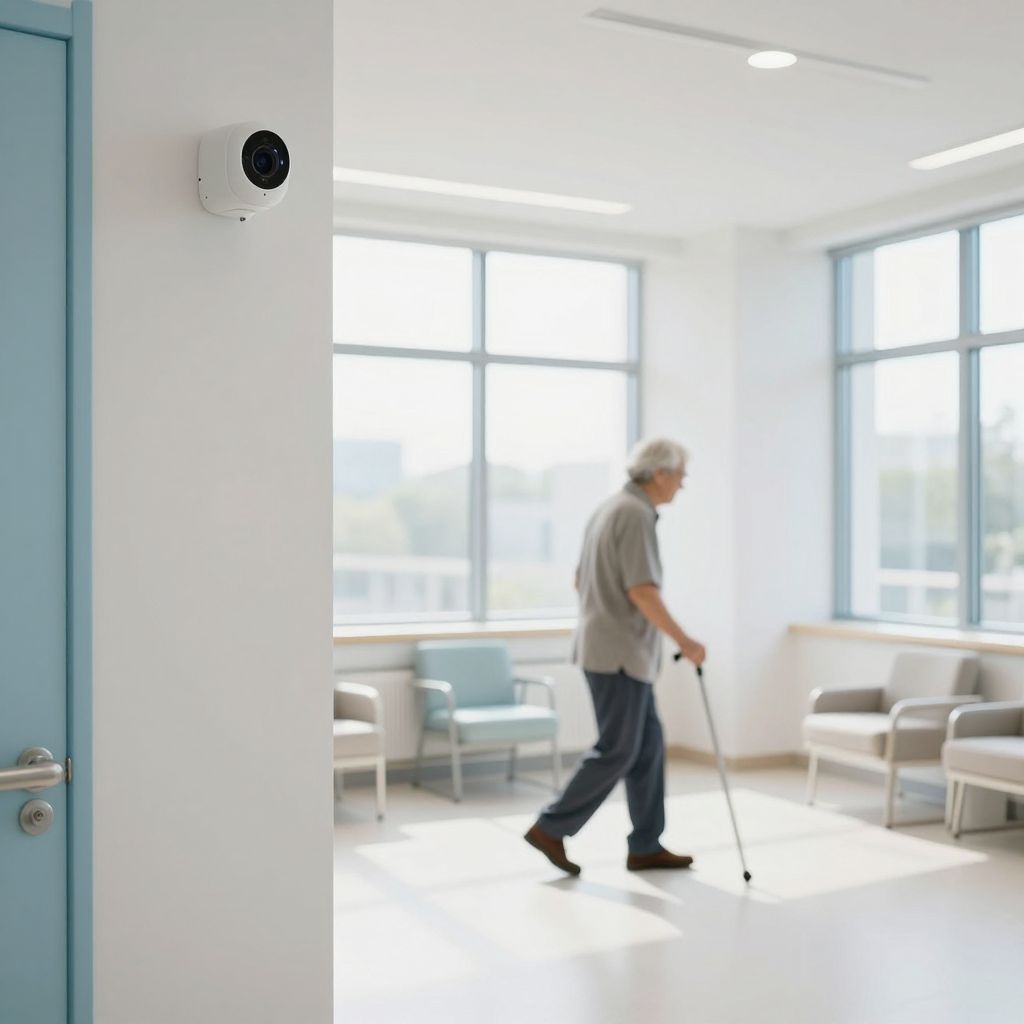
Imagine you are walking across your living room. Suddenly, your feet feel glued to the floor. You cannot take another step. This is "freezing of gait," and it is one of the most frustrating symptoms of Parkinson's disease.
For millions of people with Parkinson's, these freezing episodes can lead to falls, injuries, and a loss of independence. Standard medications often stop working well over time. But a new analysis of 31 studies offers hope for a different approach.
Freezing of gait affects about half of all people with advanced Parkinson's disease. It is not just a slow walk. It is a complete stop. Your brain sends the signal to move, but your legs do not respond.
Current treatments include medications like levodopa. But these drugs become less effective over time. They can also cause side effects. Patients and doctors have been searching for better options.
Deep brain stimulation (DBS) is a treatment where doctors place thin wires in specific areas of the brain. These wires deliver mild electrical pulses. Think of it like a pacemaker for the brain. It helps regulate the faulty signals that cause Parkinson's symptoms.
The old way versus what we now know
Doctors used to think DBS worked the same way no matter what. Turn it on, and symptoms improve. But this new research shows a more complex picture.
Here is the twist. DBS helps freezing of gait best when patients are in their worst state. That means when their medication has worn off. When they are "off" their drugs, DBS can make a real difference.
When patients are already feeling good from their medication, DBS adds less benefit. This is a crucial finding for doctors deciding when and how to use this treatment.
How the brain gets unstuck
To understand why this works, picture a traffic jam in your brain. In Parkinson's disease, certain brain circuits become overactive or underactive. It is like a highway where the stoplights are broken.
DBS acts like a traffic controller. The electrical pulses help reset the rhythm of brain cells. This is especially helpful in an area called the subthalamic nucleus. Think of it as a major intersection in your brain's movement highway.
High-frequency stimulation (fast pulses) seems to work better than slower pulses. It is like using a steady green light instead of a blinking one. The brain gets clearer signals about when to move.
Researchers combined data from 31 studies involving 905 patients with Parkinson's disease. They measured freezing of gait using a standard questionnaire called the FOG-Q.
The results showed that DBS reduced freezing scores by about 3 points on average. That may sound small, but for someone who freezes multiple times a day, even a few fewer episodes can mean fewer falls and more freedom.
The biggest improvement came when patients were off their medication. In that group, DBS reduced freezing scores by nearly 6 points. That is a meaningful change in daily life.
This does not mean DBS works for everyone the same way.
Movement scores (how well people could move overall) improved by 14 points when patients were off medication. That is a substantial gain. It means people could walk, stand, and turn more easily.
But there is a catch
Not all patients responded the same way. Some saw big improvements. Others saw little change. The studies varied widely in their methods and results.
The best results came from stimulating the subthalamic nucleus with high-frequency pulses. But even then, some patients did not improve. This tells us that DBS is not a one-size-fits-all solution.
Doctors need to carefully select which patients will benefit most. The brain target, the frequency of stimulation, and the patient's medication status all matter.
If you or a loved one has Parkinson's disease with freezing of gait, DBS may be worth discussing with a neurologist. The treatment is already approved and available. It is not experimental.
But be realistic about what it can do. DBS works best when medication is not helping. It is not a replacement for drugs. It is an add-on treatment.
Talk to your doctor about whether you are a good candidate. You will need a full evaluation at a movement disorders center. The surgery is safe but carries risks, including infection and bleeding.
What we still do not know
This analysis has limits. Most studies were small. They used different methods to measure freezing. Some did not report results clearly.
The researchers noted "substantial variation" across studies. That means we cannot say for certain how well DBS will work for any single person. More controlled trials are needed.
Also, the analysis focused mainly on one brain target (the subthalamic nucleus). Other targets may work better for some patients, but we do not have enough data yet.
What happens next
Researchers are planning larger studies to compare different brain targets and stimulation settings. They want to find out which patients benefit most and why.
Newer DBS devices can adjust stimulation automatically based on brain signals. These "smart" systems may improve results further. But they are still being tested.
For now, DBS remains a helpful tool for many people with Parkinson's disease. It is not a cure. But for those who freeze when their medication wears off, it can mean the difference between staying stuck and moving forward.