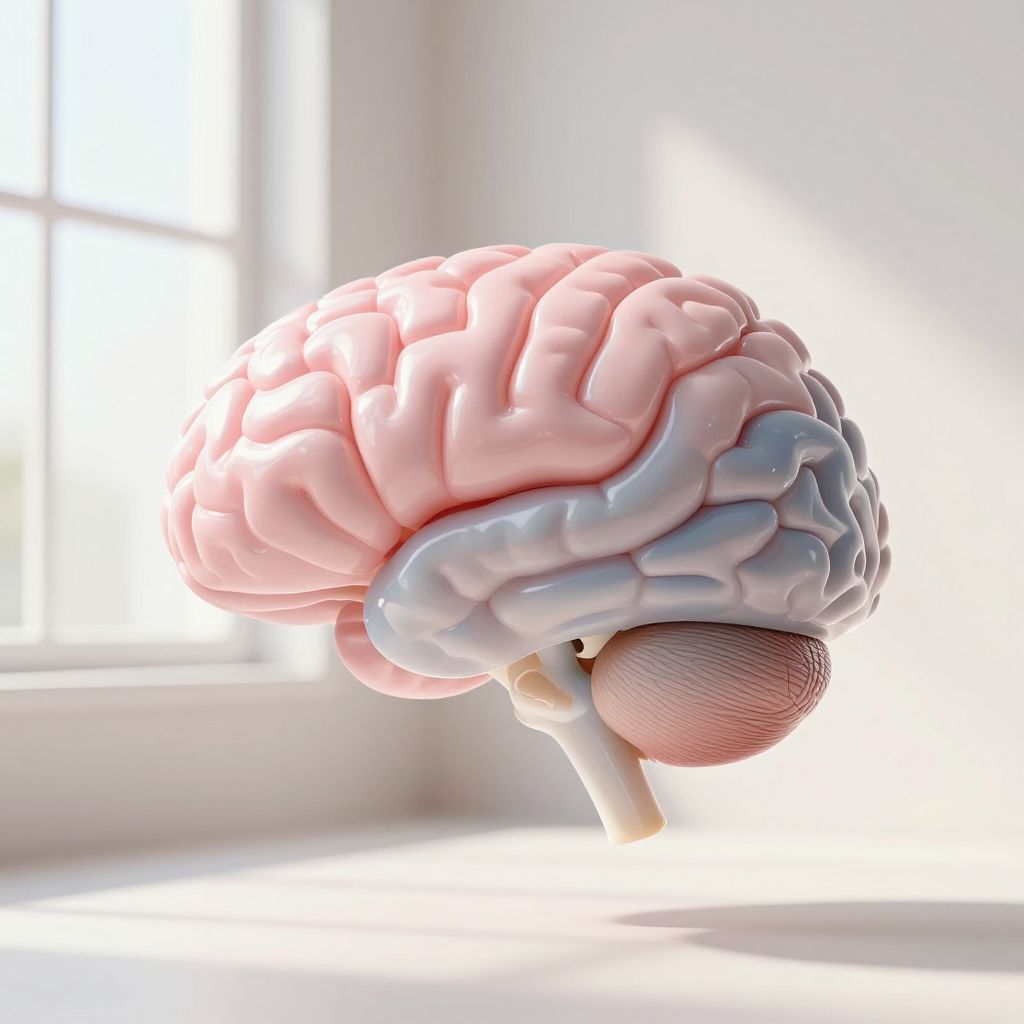
Imagine you are sitting in a quiet room. A gentle flicker of light pulses at a steady rhythm. For some people, this simple stimulation may help their brain networks shift and reorganize. For others, the change is smaller. A new study suggests that a person's cognitive reserve, built through education and work, may be the key to understanding that difference.
This matters because Alzheimer's disease affects millions of adults and their families. It often starts with subtle memory changes that can be frustrating and scary. Current treatments focus on symptoms or on clearing amyloid plaques, but they do not work for everyone. Many people are looking for non drug options that might support brain function. Sensory stimulation, like a flickering light, is one such area of interest.
In the past, researchers looked at whether gamma stimulation could help the brain in Alzheimer's disease. But results have been mixed. Some people show strong brain responses, others show little change. This new study asks a different question. What if the person's background, their life experiences and learning, shapes how their brain adapts during stimulation? That is where cognitive reserve comes in.
Think of cognitive reserve as your brain's backup plan. It is like having extra lanes on a highway. When one lane is blocked, traffic can still flow using the other lanes. Education and complex jobs may build these extra lanes. In Alzheimer's disease, these backup routes might help the brain cope with damage. The study suggests that people with lower reserve may rely more on immediate changes during stimulation, while those with higher reserve may already have stable networks that shift less.
The study used a technique called EEG, which measures electrical activity from the scalp. It included adults aged 55 and older from a memory clinic and the community. Some had normal thinking, some had mild cognitive impairment, and some had Alzheimer's dementia. All had brain scans to check for amyloid plaques, a hallmark of Alzheimer's. The team grouped people into three categories: amyloid negative with normal thinking, amyloid positive with mild cognitive impairment, and amyloid positive with Alzheimer's dementia. They focused on people in the prodromal stage, which means early Alzheimer's changes before full dementia.
Participants were asked to rest and then view a visual stimulation that flickered at 32 times per second, also called 32 Hz. The researchers measured how their brain networks changed using a method called spectral Granger causality. This method looks at how strongly different brain regions influence each other. They summarized these networks with four measures: mean strength, weighted clustering coefficient, average shortest path length, and outreach. These are ways to describe how connected and efficient the brain's network is.
Cognitive reserve was estimated using education and occupation, then split into high and low groups. The team analyzed the data while accounting for age, sex, and a gene called APOE that is linked to Alzheimer's risk.
The results showed a clear pattern in people with prodromal Alzheimer's disease. Those with lower cognitive reserve had larger increases in network strength, clustering, and outreach when moving from rest to stimulation. In simple terms, their brain networks became more connected and more clustered during the light flicker. People with higher cognitive reserve showed smaller changes. This suggests that lower reserve may be linked to a more reactive brain network during gamma stimulation.
The study also found that the strength of the gamma entrainment, how well the brain locked onto the 32 Hz rhythm, was higher in the low reserve prodromal group. Across all participants, stronger entrainment was linked to larger network changes during stimulation. This hints that the brain's ability to follow the rhythm may drive how networks reorganize.
But there is a catch. The low reserve prodromal group was small, and the findings were sensitive to how the data was modeled. This means the results are promising but preliminary. They should be interpreted with care.
Experts in the field note that cognitive reserve is a key factor in how Alzheimer's disease progresses. This study adds to the idea that personal background may influence how the brain responds to non drug interventions. It also highlights the need to consider reserve in future trials of sensory stimulation.
What does this mean for you? If you or a loved one is concerned about memory changes, it is important to talk with a doctor about evaluation and available options. Gamma stimulation is not a standard treatment right now. It is being studied in research settings. If you are interested, ask about clinical trials or ongoing studies at academic centers. Do not start any stimulation device without medical guidance.
The study has limitations. It was cross sectional, meaning it looked at people at one point in time. The sample was small, especially the low reserve prodromal group. The findings need to be replicated in larger, more diverse groups. The stimulation was done in a lab, so real world use may differ.
Looking ahead, researchers plan to test gamma stimulation in larger trials. They will look at whether changes in brain networks lead to improvements in thinking or daily function. They will also explore whether cognitive reserve can be used to match people to the right intervention. This is a step toward more personalized care for Alzheimer's disease.