Mode
Text Size
Log in / Sign up

Sirolimus-coated balloons match paclitaxel-coated balloons for late lumen loss in coronary artery diseaseTwo Drug-Coated Balloons Go Head-to-Head in Heart Artery Treatment

AI-generated summary of the cited source, checked by automated accuracy review. How we work

Key Takeaway
Consider PCB may have advantages over SCB for late lumen enlargement and restenosis, but safety data are lacking.

This meta-analysis pooled data from patients with coronary artery disease to compare sirolimus-coated balloons (SCB) with paclitaxel-coated balloons (PCB). The total sample size was 1043 patients. The primary outcome was not reported, but secondary outcomes included late lumen loss, late lumen enlargement, and binary restenosis rates in de novo lesions.

For late lumen loss, there was no significant difference between SCB and PCB (mean difference 0.06, 95% CI -0.02 to 0.14). For late lumen enlargement, a statistically significant difference favored PCB (risk ratio 0.66, 95% CI 0.49 to 0.87, P=0.004). For binary restenosis rates in de novo lesions, a statistically significant difference also favored PCB after sensitivity analysis, though the effect size and confidence interval were not reported.

Safety data, including adverse events, serious adverse events, and discontinuations, were not reported. Follow-up duration was not reported. The authors note that larger, longer-term studies are needed to establish the optimal drug-coated balloon strategy for different patient populations. Funding and conflicts of interest were not reported.

The authors conclude that both balloon types appear safe and effective, though PCB may retain certain advantages in specific scenarios. However, the absence of safety data and the limited reporting of some outcomes warrant caution in interpreting these findings.

How this fits prior evidence

This meta-analysis extends prior coverage of coronary artery disease by directly comparing two drug-coated balloon technologies. Previous coverage noted that cutting balloon predilatation reduces acute recoil and stenosis but does not significantly improve optimal lesion preparation, and that circulating microRNAs show moderate diagnostic accuracy for coronary artery disease. The current findings suggest that while SCB and PCB have similar efficacy for late lumen loss, PCB may offer advantages for late lumen enlargement and binary restenosis in de novo lesions. This adds to the evidence base on device selection in coronary interventions, though safety data remain unreported.

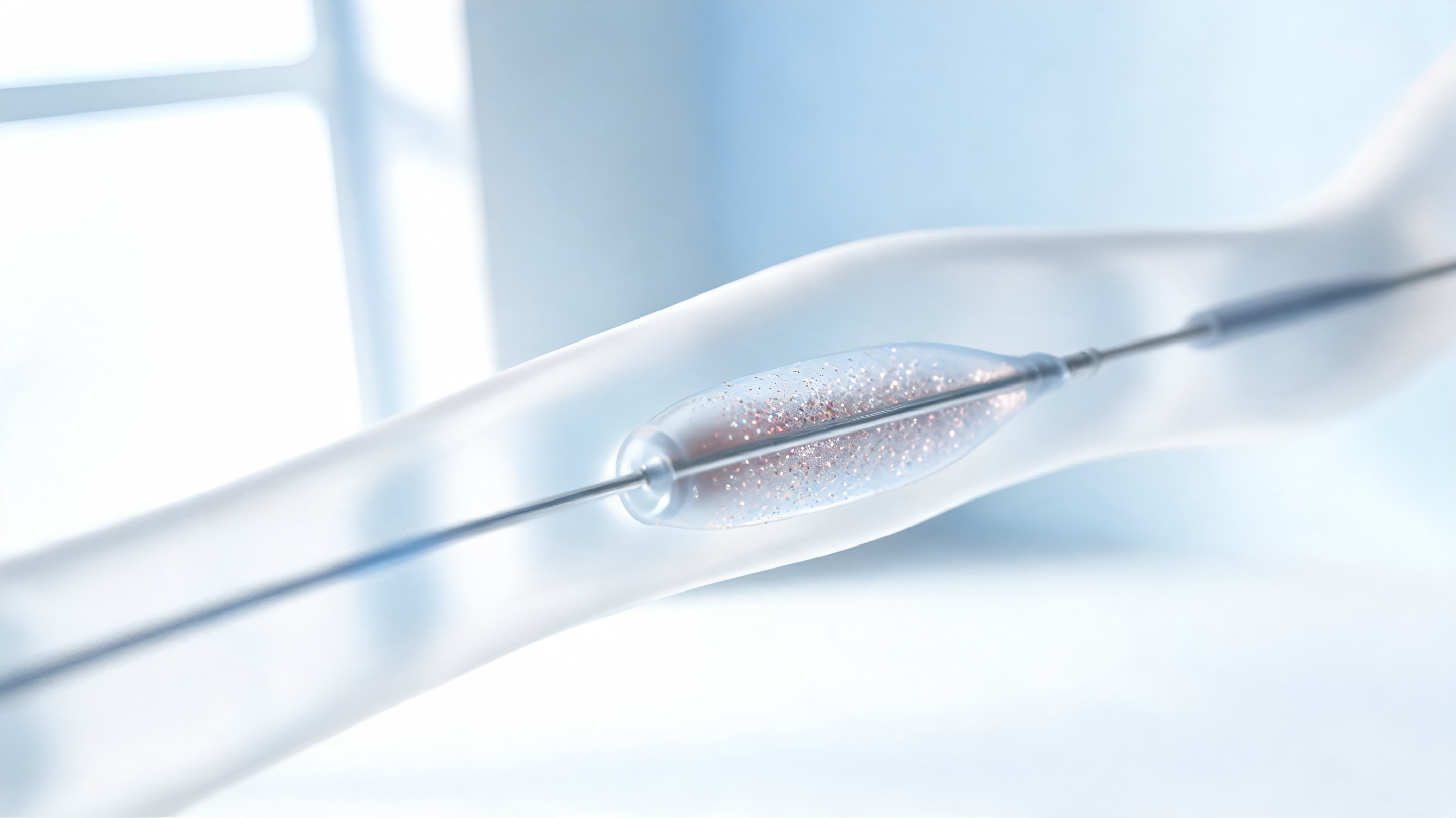
If you have narrowed heart arteries, doctors sometimes use a tiny balloon coated with medicine to prop them open. Two types are common: one coated with sirolimus and one with paclitaxel. A new analysis pooled data from 1,043 patients to see which works better.

The main finding? Both balloons performed similarly when it came to late lumen loss, a measure of how much the artery narrows again. The difference was tiny and not statistically significant. But for late lumen enlargement, which means the artery actually gets a bit wider over time, the paclitaxel-coated balloon came out ahead. The same was true for binary restenosis in new lesions, meaning the artery re-narrowing, after a sensitivity analysis.

That said, the researchers didn't report safety data like adverse events or side effects, so we can't draw conclusions about safety from this analysis. And the authors note that larger, longer-term studies are needed to figure out the best balloon for different patients.

So what does this mean for you? Both types appear safe and effective overall, but the paclitaxel version may have a slight edge in certain situations. Talk to your doctor about which option is right for you.

What this means for you:
Both drug-coated balloons work similarly, but the paclitaxel version may keep arteries open slightly better.

Common questions

What is the difference between sirolimus-coated and paclitaxel-coated balloons?

They are two types of drug-coated balloons used to treat narrowed heart arteries. One releases sirolimus and the other releases paclitaxel. This analysis found they had similar results for late lumen loss, but the paclitaxel balloon performed better for late lumen enlargement and binary restenosis in new lesions.

Are these balloons safe?

The analysis did not report safety data such as adverse events or side effects. However, the authors note that both balloon types appear safe and effective overall. For specific safety concerns, talk to your doctor.

Who might benefit from one balloon over the other?

The study included patients with coronary artery disease. The paclitaxel-coated balloon showed advantages in late lumen enlargement and binary restenosis in de novo lesions. But the authors say larger, longer-term studies are needed to determine the best strategy for different patient groups. Your doctor can help decide what's right for you.

Study Details

Study typeMeta analysis
Sample sizen = 1,043
EvidenceLevel 1
PublishedOct 2026
View Original Abstract ↓
BACKGROUND AND AIM: Drug-coated balloons (DCBs) are a key alternative to drug-eluting stents for coronary artery interventions, offering the advantage of drug delivery without permanent implants. Both paclitaxel-coated balloons (PCBs) and sirolimus-coated balloons (SCBs) are valuable treatment options. This systematic review and meta-analysis compare the efficacy and safety of sirolimus-coated versus paclitaxel-coated balloon catheters in patients with coronary artery disease. METHODS: We conducted a systematic review and meta-analysis following PRISMA guidelines, searching five databases. We exclusively included RCTs. Risk ratios (RR) and mean differences (MD) with 95% confidence intervals were calculated using fixed-effects or random-effects models, with sensitivity analysis performed in cases of heterogeneity. RESULTS: Eight trials involving 1043 patients were included. The meta-analysis demonstrated no significant difference between SCB and PCB for late lumen loss (MD 0.06, 95% CI [-0.02 to 0.14]). Only two outcomes showed statistically significant differences favoring PCB: reducing late lumen enlargement (RR 0.66, 95% CI [0.49-0.87], P = 0.004) and, after sensitivity analysis, lowering binary restenosis rates in de novo lesions CONCLUSION: This meta-analysis shows SCB and PCB have similar safety and efficacy in coronary artery interventions, with no significant differences in most outcomes. However, PCB outperforms late lumen enlargement and binary restenosis rates in de novo lesions. Similar outcomes across sirolimus formulations indicate other factors influence success. Both balloon types appear safe and effective, though PCB may retain certain advantages in specific scenarios. Larger, longer-term studies are needed to establish the optimal drug-coated balloon strategy for different patient populations. CLINICAL TRIAL NUMBER: not applicable.
Free Newsletter

Clinical research that matters. Delivered to your inbox.

Join thousands of clinicians and researchers. No spam, unsubscribe anytime.