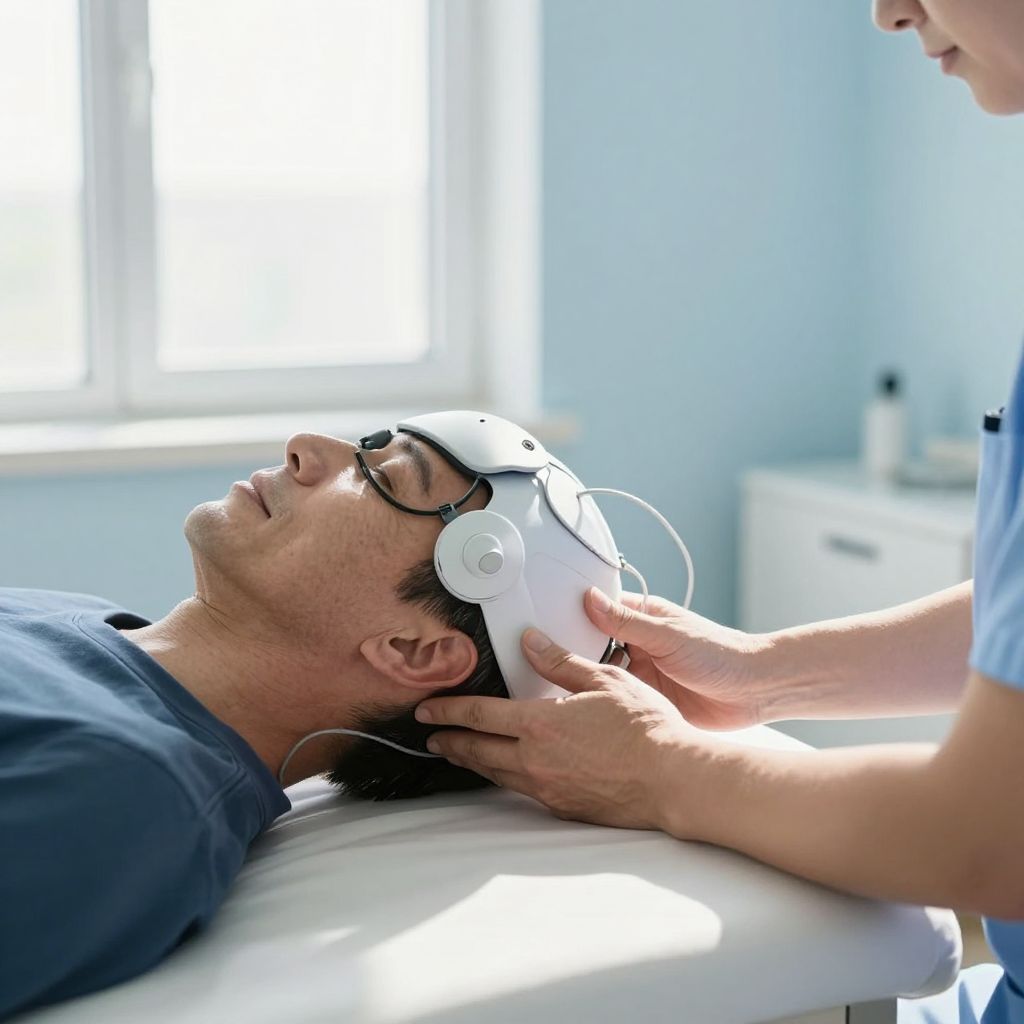
Non-invasive neural stimulation improves upper limb function in subacute stroke: meta-analysis
Brain stimulation may help stroke survivors regain arm function
A systematic review and meta-analysis of 24 RCTs (1091 patients) found that non-invasive neural stimulation (NINS) was associated with stati…
A review of 24 trials finds that non-invasive brain stimulation may modestly improve arm movement and daily activities after stroke, but evi…

Protocol outlines planned network meta-analysis of electromagnetic stimulation for post-stroke lower limb dysfunction
Planned review to guide electromagnetic stimulation for stroke recovery
This document is a protocol for a systematic review and network meta-analysis focused on electromagnetic stimulation protocols for patients …
A planned protocol outlines how researchers will evaluate electromagnetic stimulation for stroke patients with leg movement issues before an…

Genetic variants and environmental factors like PM2.5 exposure may increase asthma risk in susceptible individuals
Asthma risk tied to genes and air pollution
This narrative review examines asthma heritability and environmental risk factors. Currently identified genetic variants explain only part o…
A review finds that air pollution and genes both shape asthma risk, but current genetics only explain part of the story.

Meta-analysis suggests specific rTMS protocols improve cognitive and functional outcomes in stroke survivors
Brain Stimulation Improves Thinking After Stroke
This Bayesian network meta-analysis evaluated repetitive transcranial magnetic stimulation (rTMS) protocols in 2543 patients with post-strok…
A new analysis finds that specific types of brain stimulation can boost memory and daily function after a stroke.

Network meta-analysis of Tuina-based combination therapies versus oral medication for insomnia
Tuina combination therapies beat oral medication for insomnia in this exploratory review
This systematic review and network meta-analysis evaluated Tuina-based combination therapies against oral medication in 2,663 subjects with …
Combining Tuina with breath guiding, music, or foot baths worked better than oral medication for insomnia in this review of 2,663 patients.

Narrative review suggests music therapy may improve cognition and neuropsychiatric symptoms in cognitive impairment
Music therapy may help minds affected by Alzheimer's and other cognitive conditions
This narrative review examines the role of music therapy for cognitive impairment. The authors suggest that music therapy may improve cognit…
Music therapy might improve thinking and mood for people with Alzheimer's disease, mild cognitive impairment, or Parkinson's-related cogniti…

Systematic Review: Flavonoids from Traditional Chinese Medicine Show Promise for NAFLD
Flavonoids from Chinese medicine show promise for fatty liver disease
This systematic review examines flavonoids from traditional Chinese medicine for non-alcoholic fatty liver disease. The authors report that …
A systematic review suggests flavonoids from traditional Chinese medicine may improve liver health in humans and animals by reducing fat and…

Systematic review and meta-analysis shows dual-task training improves motor function in cerebral palsy children
Dual-task training improves balance and mobility in cerebral palsy
This systematic review and meta-analysis evaluated dual-task training versus conventional rehabilitation in 582 children with cerebral palsy…
A new analysis finds that dual-task training may help children with cerebral palsy improve balance, walking, and motor skills better than st…

Review of dopamine receptor targeting for chronic pain and mood disorders notes limited causal evidence
Treating dopamine receptors offers new hope for chronic pain and mood disorders
This narrative review examines the role of dopamine receptor system treatment in chronic pain and mood disorders. The authors synthesize fin…
Targeting dopamine receptors shows promise for managing chronic pain and mood issues, though more patient trials are needed to confirm benef…

Systematic review and meta-analysis of retinal biomarkers in frontotemporal dementia and Alzheimer disease
Retinal scans show thinner layers in frontotemporal dementia than Alzheimer disease
This systematic review and meta-analysis synthesized optical coherence tomography data on retinal biomarkers in frontotemporal dementia, Alz…
A new analysis of retinal scans found that people with frontotemporal dementia have thinner eye layers than those with Alzheimer disease or …

Review of glaucoma management without reported intervention details or outcomes
Review finds no clear best treatment for glaucoma
This narrative review addresses glaucoma management but does not report specific interventions, comparators, or outcomes. The authors provid…
A review of glaucoma treatments found no single approach is clearly best. What this means for patients.

Narrative review discusses MS continuum concepts for high-risk individuals
New review suggests viewing MS as a continuum helps monitor those at higher risk
This narrative review addresses multiple sclerosis in individuals at higher risk for the condition. The authors argue that conceptualizing M…
A new review suggests that seeing multiple sclerosis as a continuous process could help doctors better monitor people at higher risk for the…